Tucson 2026 Predictions: Attendance, Buying, and Gem Trends
The Trade in FocusAs the colored stone market gears up for the Tucson gem shows, there are mixed expectations for the events as the sector faces tariffs and other challenges from geopolitical events.
Exhibitors importing goods into the U.S. will have to pay the tariff rate upfront. Some could use Carnet, which allows for temporary entry without paying duties/taxes if the goods leave the U.S. within a certain period of time. But using ATA Carnet means that stones purchased at the show can’t be delivered there and that it has to be secured with either a carnet bond or certified check for a percentage of the value, leading to another amount that has to be paid upfront. Technically, exhibitors can file for a refund for both of these sums of money once they re-export the goods, but there doesn’t seem to be much clarity about timeline or even the process to do that.
Under the Annex III provision, certain loose materials that originate or were substantially transformed in the EU or Switzerland would’ve had a 0% rate, but President Trump also recently announced he would impose a 10% tariff on goods from several European countries on Feb. 1.
It’s all this and more that leaves a big question mark hanging over this year’s Tucson shows.
Market Health and Buying Expectations
Despite tariff announcements and other issues, the colored stone market had a decent year in 2025.
“The demand for high quality color was extremely strong in the third and fourth quarters for us,” said Jaimeen Shah of Prima Gems. He noted that most of their business came from the higher-end quality of goods, representing about 80% of business this year compared with about 50% other years.
Shekhar Shah of Real Gems also said the latter half of the year was good considering the challenges the industry was facing, but noted it was very difficult to procure merchandise at a “reasonable” price.
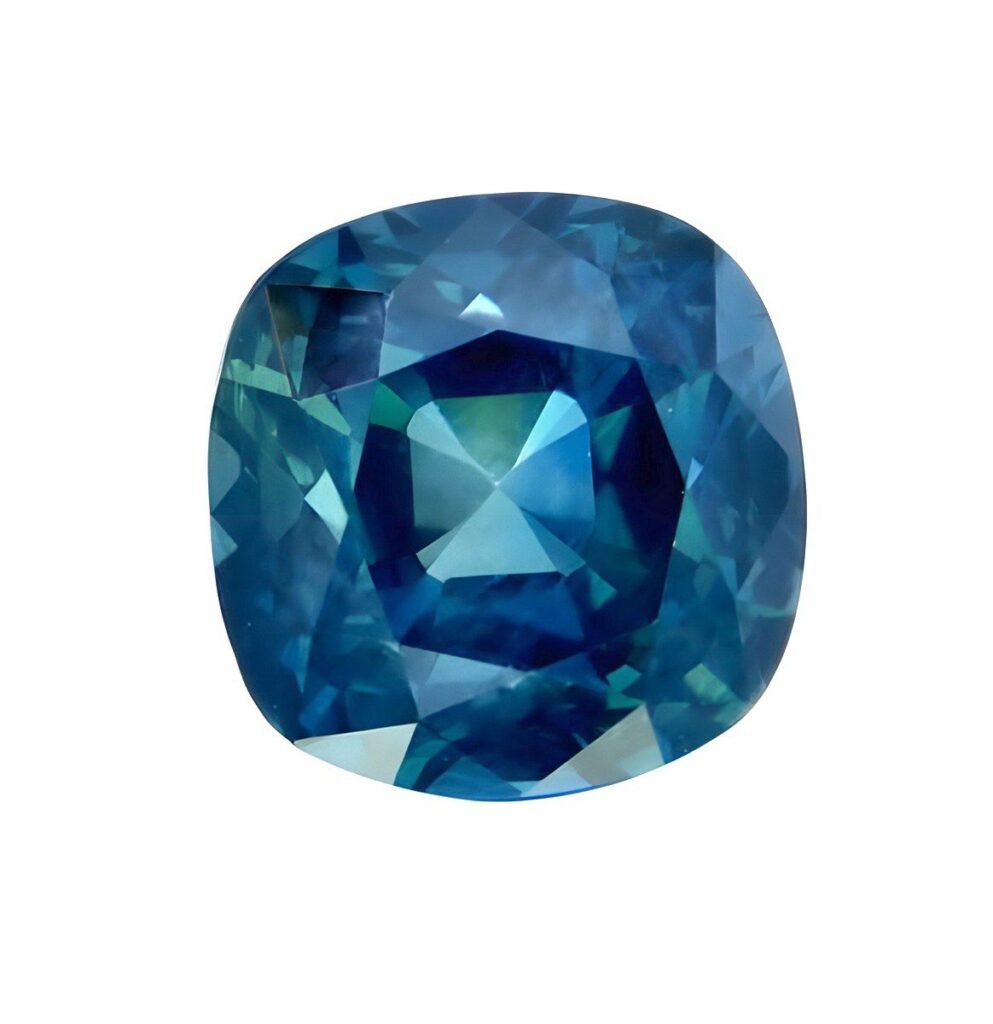
A Montana sapphire from Navneet Gems & Minerals.
(Photo credit: Navneet Gems & Minerals)
For AGTA exhibitors, Tucson will mostly be business as usual, and many of them expect it to be a decent year. Jaimeen Shah predicted it would be a strong show for them, due in part to many small- to medium-sized American companies holding off on replacing goods they sold in the latter part of the year due to tariff confusion and needing to restock now.
“Seeing vendors in person and not having to deal with tariffs should help these companies replenish their stock without having to worry about hidden expenses and/or paperwork,” he said. “The situation will be similar for vendors who prefer to deal with one large shipment to the show rather than paperwork associated with small sales through the year. The show, therefore, will be more meaningful.”
Along similar lines, Shekhar Shah told GemGuide he finds that Tucson stands out as an “anomaly” in the trade show circuit—the focus is there for color, and buyers come with a targeted list, able to spend a few days without distraction on a show floor with a more relaxed atmosphere.
International exhibitors have mixed thoughts, for obvious reasons. Bangkok-based Navneet Gems & Minerals predicted GJX will be a good show as the colored stone market continues to grow, especially for sapphire and as more diamond businesses move into color. Director Navneet Agarwal told GemGuide that people changed their buying patterns in 2025, quick to replace depleted stock but hesitant to overstock.
Some international companies also found a new solution in opening offices in the U.S. last year to hold inventory. But many international wholesalers remain hesitant about this year’s Tucson shows.
ICA’s Doug Hucker told GemGuide they haven’t seen any great amount of its members dropping out, though he mentioned there is some uncertainty about performance among those attending and likely to be different inventories showing up this year due to tariffs. He also said he believes that those retailers and designers who use color will still be in Tucson this year to replenish goods.
Belmont Emeralds’ Marcelo Ribeiro said their decision to exhibit in Tucson again reflects the show’s ongoing importance as a meeting point for the trade, noting they expect it to have a solid attendance and good traffic and buying. “That said, we believe U.S.-based jewelry manufacturers may begin to face challenges in sourcing. A significant volume of inventory was imported into the U.S. prior to the tariffs and is still being sold at legacy cost levels, but this supply is finite. As that inventory is absorbed, new production will come at a significantly higher cost, which is likely to influence sourcing strategies and pricing going forward.”
Wez Barber of Singapore-based Mahenge Gems said people have continued to make larger purchases of fine-quality stones, but noted the middle market and commercial end have been much slower. “I think that Tucson will be tough this year, with a negative impact being primarily caused by tariffs and the confusion around them. Only certain countries have been able to avail of the waiving of tariffs, and we are not based in one of those countries. As such, our inventory for the show will be severely curtailed. I think that other suppliers will be experiencing the same thing. Other geopolitical issues outside of the industry, I think, will put people off travel at this time, too.”
Those Opting Out
International attendance is expected to be down slightly this year, from what GemGuide has heard so far. One industry contact said he had heard several brokers from abroad who usually attend to sell stones they’ve gathered from their home countries won’t be there this year.
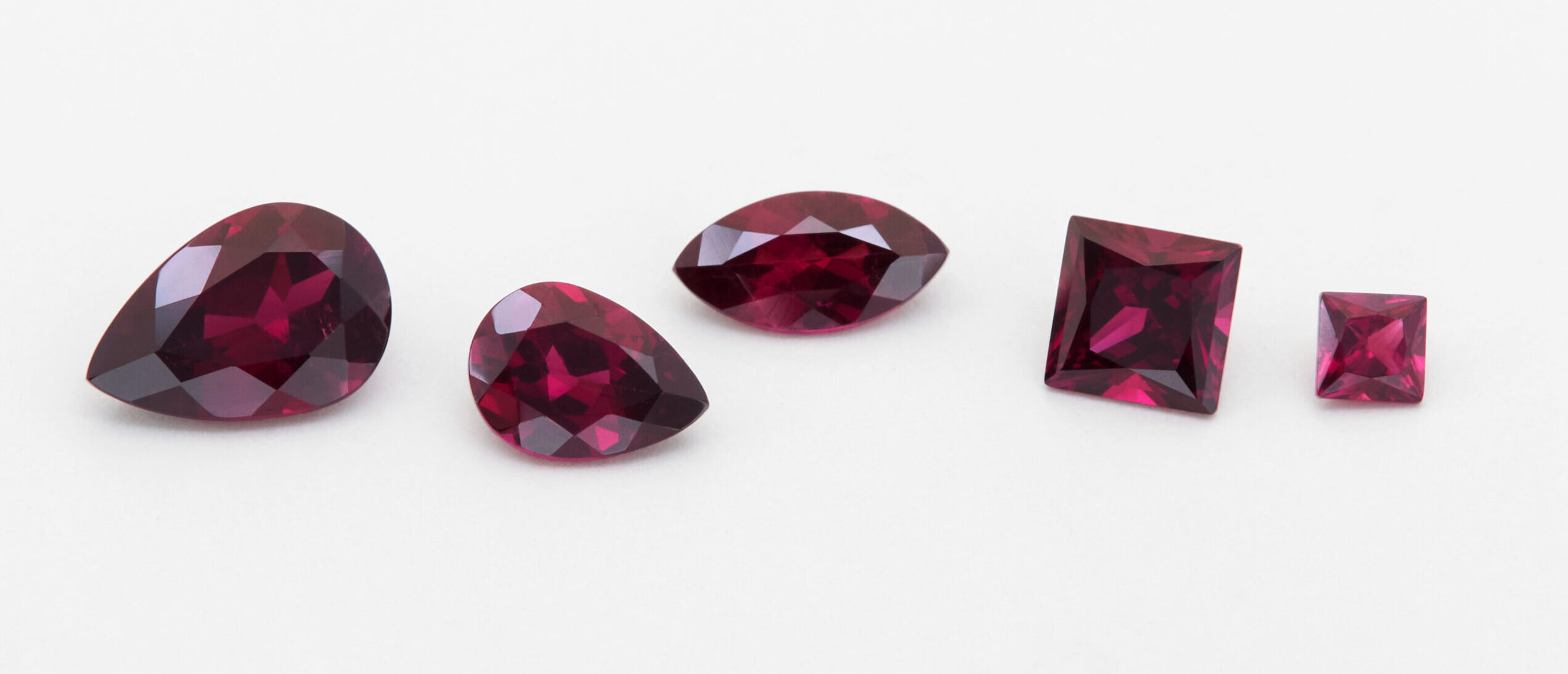
Mixed-shape American rhodolite garnet from Columbia Gem House.
(Image courtesy of Columbia Gem House)
Another international gem dealer told GemGuide he was forgoing Tucson this year for several reasons, starting with tariffs. He also noted that though he has a valid ESTA (an automated system that determines the eligibility of visitors to travel to the United States under the Visa Waiver Program), recent announcements by the U.S. regarding expanded traveler information requirements concern him.
To round it out, he mentioned the rising cost of attending Tucson, noting the increasing costs have “reached a point where participation is increasingly a marketing exercise and an opportunity to maintain relationships, rather than a commercially viable undertaking.” He is instead opting to show in Hong Kong in March, which he said offers more favorable conditions for importing, lower overall costs of attendance, and direct access to the rapidly growing mainland Chinese market for colored gemstones.
What Might Sell
Jaimeen Shah told GemGuide that when it came to cuprian tourmaline and spessartine garnet, he couldn’t keep any stones in stock this year.
“Funnily enough, every time I bought a new stone in these two categories, I broke my buying record in terms of price per carat, and every time I said to myself, ‘This stone is going to the grave with me,’ and then it would sell within the month and I would see myself repeating the same process and saying the same thing to myself.”
Agarwal noted a strong demand in Montana sapphire due to the stone’s story and marketing efforts from larger companies last year, as well as good selling in marquise and elongated cushion shapes.
Columbia Gem House, too, will put an emphasis on American gems and distinct cuts, debuting a new collection of faceted star-shaped gemstones in sapphire, citrine, neon green beryl, white quartz, and garnet, in calibrated sizes. The company will also introduce faceted crescent moon cuts in sapphire and Idaho garnet, as well as an expanded selection of star cabochons in sapphire and ruby, driven by increased customer requests, and American rhodolite garnet from Idaho.
In emeralds, Shekhar Shah noted increased demand for smaller calibrated sizes from both designers and large volume manufacturers as well as an increase in the use of colored stones for engagement rings, a trend that is expected to increase in 2026.
Where Prices Will Land
As far as prices are concerned, one thing is clear: they’re firm.
“I don’t see a correction coming, but the crazy price increases we saw over the last few years certainly have ceased. We’ve hit a ceiling, and price rises in the future will be more reasonable and sustainable, driven more by market forces than external influences as has been the case in the last few years,” Barber said.
Jaimeen Shah of Prima Gems added that while he has seen some weakness in the medium-quality materials of late, since mining activity continues to be reduced across the sector, even though demand for the middle tier has softened, prices always seem to hold out.