Gem Focus – October 2024 – Featuring ‘Santa Maria’ Aquamarine: the best of the best for the blue gem
*Gem Focus & Market Pulse (Free Subscriber)For several gems, just giving the name of a locality is enough to bring a very specific color to mind. This is true for Burmese rubies and Kashmir sapphires. Coming from an even more specific location and perhaps lesser known to those in the trade is “Santa Maria” aquamarine.
The trade name Santa Maria originated from the color of aquamarine that came from the Santa Maria de Itabira mine in Minas Gerais, Brazil. The legendary mine produced large quantities of fine color aquamarine but is now mined out.
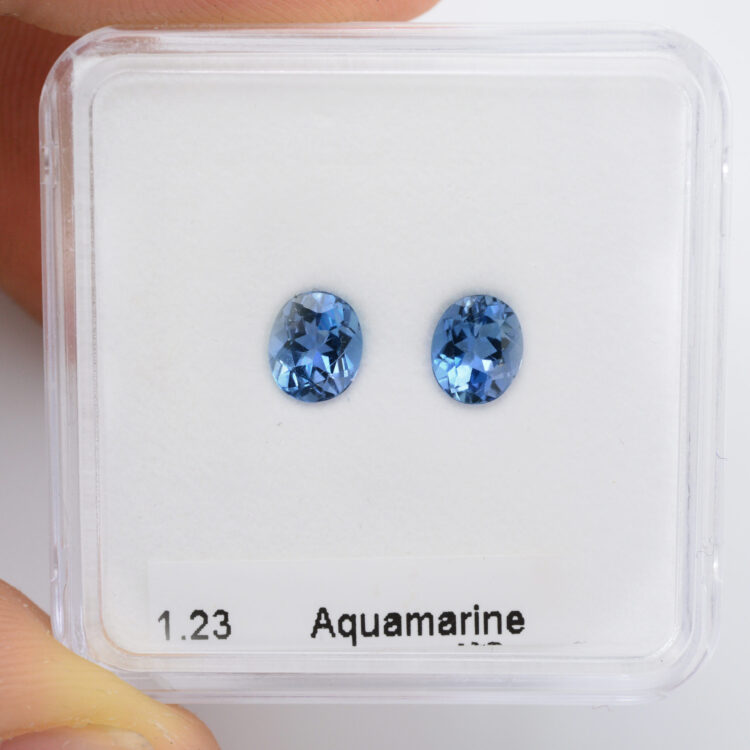
A pair of oval Santa Maria aquamarines, weighing a total 1.23 carats.
(Image courtesy of Leibish)
Today, the trade uses the name “Santa Maria” for a color of aquamarine rather than a locality (Figure 1). Since the 1970s, most Santa Maria aquamarine entering the market has been either Brazilian gems going back into the trade from estates or private sales, or gems mined from more recent aquamarine deposits in Africa, like Mozambique, Madagascar, and Nigeria.
But as so often happens in the industry, the name, which was meant to signify top color aquamarine, has been muddied as more trade members overuse it and apply it to aqua that is not from the source or falls short of the qualities it is meant to symbolize.
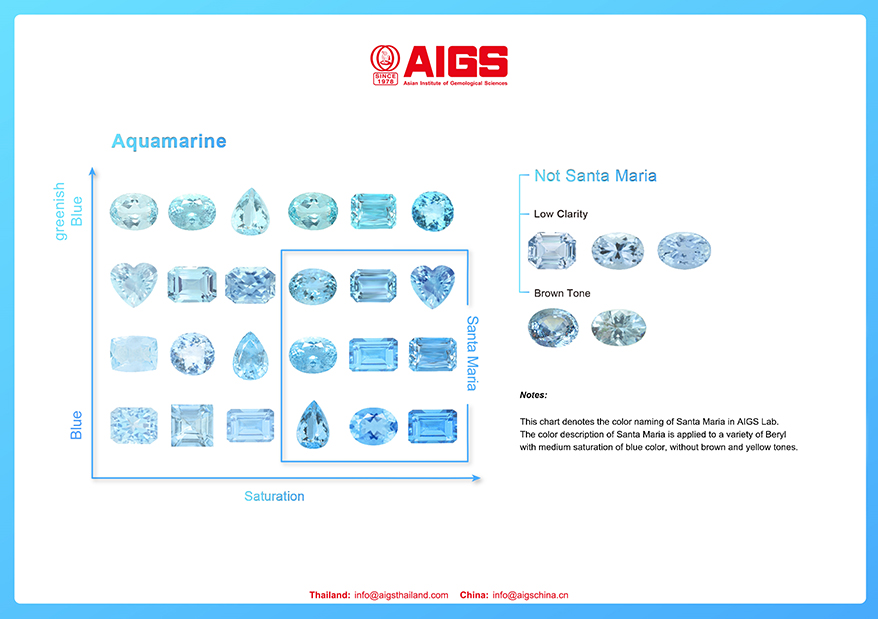
The AIGS Santa Maria aquamarine color reference, denoting which colors could be accurately referred to as Santa Maria at the lab.
(Image courtesy of AIGS)
There are some efforts in the trade to try to create boundaries for when “Santa Maria” can accurately be applied to aquamarine—in 2022, the Asian Institute of Gemological Sciences (AIGS) launched a color code and lab reports for the Santa Maria label.
The lab said that the AIGS Santa Maria color code applies to aquamarine with blue color and medium saturation without brown or yellow tints (Figure 2). Aquamarines with low saturation, low clarity, and dark tones do not meet the criteria it said.
“Trade names such as pigeon blood and royal blue have been used for centuries by gem traders to describe ideal colors implying value and rarity,” AIGS chairman Kennedy Ho said at the time. “Yet these trade names are often ambiguous with definitions varying between buyers and sellers alike. By transforming trade names into an industry standard through reports graded by third-party objectivity, AIGS aims to reduce such ambiguity.”